Why Your SIP Home Feels Different in Summer and Winter

You know the walk from a summer parking lot to your front door. The kind of August afternoon where the air feels heavy before you reach the porch, where the car door handle is too hot to touch, where you can feel the heat coming up off the driveway through your shoes.

Then you open the door.

In a lot of homes, the relief is temporary. The living room is cooler than outside, but not by much, and within the hour the air conditioner is working hard to catch up, cycling on and off, never quite settling. The room by the west-facing windows stays a few degrees warmer than the rest of the house no matter what the thermostat says.

In a home built with Structural Insulated Panels, or SIPs, homeowners tend to notice something different before they can explain it. The house feels like it has been waiting for you, at roughly the same temperature it was three hours ago when you left for the pool. No hot spot by the windows. No blast of AC trying to catch up. Just the same, comfortable house you left.

That feeling is not an accident, and it is not really about the thermostat. It is about what is inside the walls.

Key Takeaways

→ SIP walls are continuous insulation, not insulation broken up by studs every 16 inches, which eliminates most thermal bridging.

→ In summer, that means fewer hot spots, less AC cycling, and a house that holds its cool air longer after the system shuts off.

→ In winter, it means no cold walls, no drafts near windows and doors, and a heating system that is not fighting constant heat loss.

→ Lower energy bills follow from the same mechanism: the house does less work, so the HVAC system runs less.

→ SIP walls also block significantly more sound than stick-frame walls, a difference most homeowners notice before they notice anything about temperature.

What’s Actually Happening Inside the Walls
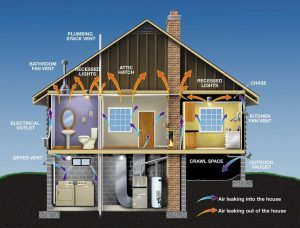
Diagram showing areas where air may leak into or out of a home.

Every wall in a home has one job: keep the temperature you want inside, and the temperature you do not want outside. How well it does that job comes down to how continuous the insulation is.

In a standard stick-frame wall, insulation sits between studs, but the studs themselves are wood, spaced every 16 or 24 inches, running straight from the outside of your house to the inside. Wood transfers heat far more easily than insulation does. Each stud becomes a small path for heat to travel through, in summer and in winter. Builders call this thermal bridging: a point in the wall where heat crosses through the structure instead of being stopped by the insulation. Framing takes up a meaningful share of a typical wall’s surface area, which means a meaningful share of that wall is quietly working against the insulation, not with it.

A SIP wall does not have that problem, because it is not built the same way. A structural insulated panel is a solid core of foam insulation sandwiched between two structural facings, manufactured as one continuous piece. There is no stud every 16 inches breaking up the insulation. The wall is the insulation, edge to edge.

Think of two coolers. One is a solid block of foam, thick and continuous on every side. The other has the same foam, but with narrow metal strips running through it every few inches, from the outside straight through to the inside. Both look similar from across the room. Only one of them is actually going to keep your ice from melting on a hot afternoon. That is the difference between a SIP wall and a stick-frame wall, and it is why the two houses feel so different to stand inside.

Here is what that difference actually looks like, room by room and season by season:

Stick-Frame vs. SIP: What You'll Notice

What you notice Stick-frame home SIP home
Rooms near west-facing windows in summer Noticeably warmer by afternoon Stays close to the rest of the house
Air conditioner behavior Cycles on and off frequently Runs steadier, holds cool air after shutoff
Exterior walls in January Cold to the touch Close to room temperature
Floors near outside walls in winter Noticeably colder Close to room temperature
Outside noise (traffic, lawnmowers, wind) Passes through clearly Noticeably dampened
Humidity in summer (Southeast climates) Sticky even with the AC running Drier, more controlled

What Summer Feels Like in a SIP Home

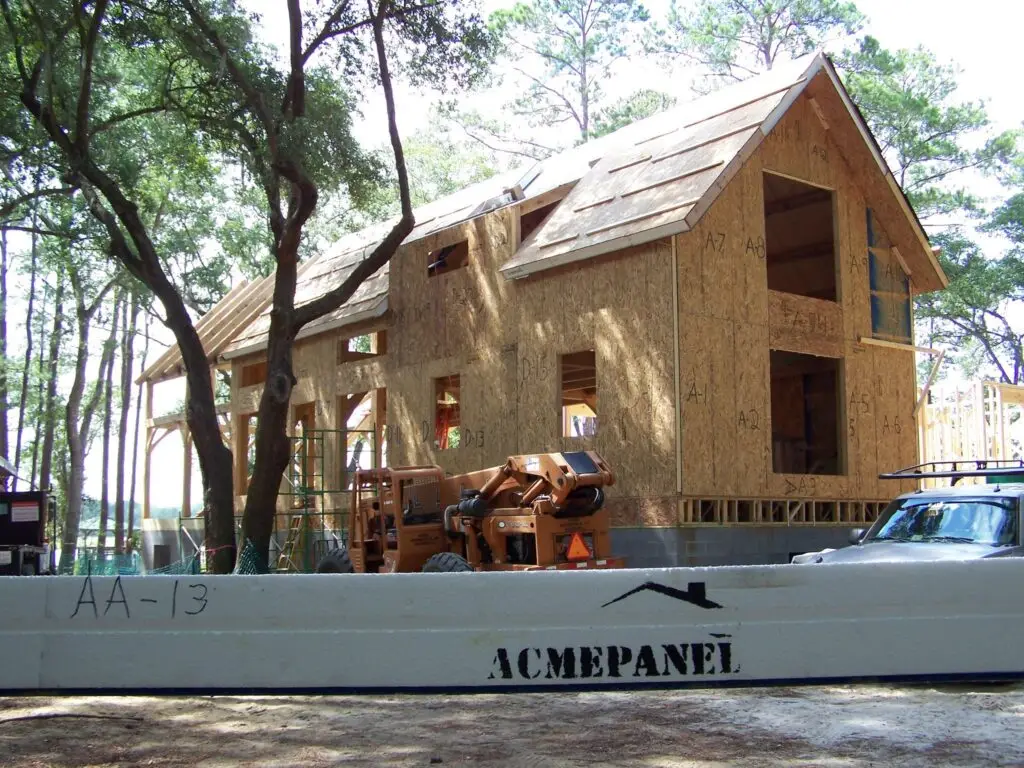
house under construction with SIPs

The most obvious thing homeowners notice in a SIP home is what does not happen. The house does not develop hot spots. The upstairs bedroom is not five degrees warmer than the living room by mid-afternoon. The room next to the west-facing windows does not turn into the room nobody wants to sit in after 3 p.m.

Because the envelope is airtight and continuously insulated, outside heat has a much harder time working its way in, room by room, than it does in a stick-frame home. The temperature in the kitchen stays close to the temperature down the hall in the bedroom, at any hour of the day. That is a small thing on paper. In practice, it is the difference between a house where everyone agrees on the thermostat and a house where someone is always too hot, reaching for a fan, or too cold, reaching for a sweater.

That consistency changes how the air conditioner behaves. Instead of racing to catch up every time the sun hits one side of the house, the system settles into a steadier rhythm: it runs, brings the house to temperature, and shuts off, without the constant short cycling a leakier envelope demands. And when the system does shut off, the house holds onto that cool air. Homeowners moving from stick-frame homes into SIP homes are often the ones who notice this first: the air conditioner turns off, and the house stays comfortable for hours, not minutes.

In the Southeast specifically, there is a second piece of this that matters just as much as temperature: humidity. A tight, well-sealed envelope gives your HVAC system the control it needs to actually manage moisture in the air, instead of fighting a house that keeps pulling in humid outside air through gaps and seams. That control is a real part of why a SIP home does not just feel cooler in summer. It feels drier, and less sticky, in a way a thermostat reading alone will not tell you.

What Winter Feels Like in a SIP Home

finished exterior of a structural insulated panel home

Walk toward an exterior wall in a lot of homes on a January morning, and you can feel the cold coming off it before you touch it. Stand near a window or an exterior door, and there is often a faint draft, even with everything shut tight. Step out of bed onto the floor near an outside wall, and it is noticeably colder than the floor in the center of the room.

None of that happens the same way in a SIP home. Because the walls are continuously insulated and the panel seams are sealed tight during construction, there is no gap for cold air to sneak through and no thermal bridge carrying outside cold straight to the interior wall surface. Exterior walls stay close to room temperature. Floors near the perimeter of the house stay close to room temperature, which matters more than it sounds like it should. It is the difference between kids who will actually sit on the floor to play and kids who will not, because the floor by the window is too cold to sit on. Windows and doors, installed and sealed correctly, do not become a source of draft either.

The heating system notices the difference even if you do not think about it directly. A tighter, better-insulated envelope means the furnace or heat pump is not working all night to replace heat that is leaking out through the walls. It runs less, because the house is not losing the heat it already made. That is the unglamorous mechanism behind why SIP homeowners tend to see lower heating bills: not a gadget, not a trick, just a house that does not need to be reheated every few hours because it was never really losing its heat in the first place.

Even in the cold months, my 3,000-square-foot home stays warm without needing to use my gas fireplace, and my heating costs have remained surprisingly low. After three days without power due to a winter storm, with temperatures ranging from 20 to 30 degrees, my SIP-built home never dropped below 67 degrees inside.

– ACME Panel Homeowner

What This Means for Your Energy Bills

There is no single percentage that applies to every SIP home. Savings depend on your climate, your home’s size and layout, your HVAC system, and how you live in the house.

What we can tell you plainly is the mechanism. A SIP home does less work to hold the temperature you set. Less heat escapes in winter. Less heat gets in during summer. Because the envelope is doing more of that work on its own, your HVAC system does not have to run as hard, or as often, to make up the difference. Less running time is where the savings come from. It is not a marketing claim. It is what happens when you remove the thermal bridging and air leaks that most homes are quietly losing energy through, every hour of every day.

For a closer look at how the upfront cost stacks up against long-term energy savings, see our Economics of SIPs page.

The One Thing That Surprises Most Homeowners

Ask ACME homeowners what surprised them most after moving in, and temperature is not always the first answer. Often, it is quiet.

A SIP wall is a solid, continuous panel, not a cavity with gaps between studs. The same construction that stops heat from moving through the wall also does a far better job of stopping sound. Traffic noise, a neighbor’s lawnmower, wind against the siding, a car door closing down the street: all of it comes through noticeably softer in a SIP home than in a comparable stick-frame home.

Homeowners do not usually go into a SIP build expecting this. They are thinking about energy bills and comfort. Then they move in, and the first thing they mention to a friend is how quiet the house is when the doors are shut and the world is happening outside. A nursery on the street side of the house that does not pick up every passing car. A home office where a video call does not compete with the neighborhood. It is a small thing to describe and a significant thing to live inside.

Is This What You’re Building Toward?

Underneath all of this is a simple idea: a house should not work against the people living in it. It should not have a room everyone avoids in the afternoon. It should not have a floor that makes you flinch in January. It should not require you to think about the thermostat every time the weather changes outside.

That is not just a technical outcome. It is a family outcome. It is the difference between a house you manage and a house that quietly takes care of you, season after season, year after year. If you are planning a build and you want a home that feels as good as the numbers say it should, that feeling is not an accident. It comes from how the walls are built, long before you ever move in.

ACME Panel manufactures SIPs in a solar-powered facility in Radford, Virginia, and we have spent years helping homeowners and builders across the region get this right, from the first conversation to the final panel. If you are still in the research phase and want to talk through what a SIP home would actually feel like for your family, in your climate, on your lot, we are glad to talk it through with you.

Frequently Asked Questions

Why do SIP homes feel more comfortable than stick-frame homes?

SIP walls are built as one continuous panel of foam insulation, without the wood studs that break up insulation in a stick-frame wall. Those studs act as thermal bridges, letting heat move through the wall in summer and winter alike. Without them, a SIP home keeps a more even temperature from room to room and asks less of the HVAC system to maintain it.

Do SIP homes stay cooler in summer without running the air conditioner constantly?

Yes. Because the building envelope is airtight and continuously insulated, outside heat has a harder time working its way into a SIP home. The air conditioner cycles less often, and the house holds onto cool air longer after the system shuts off, compared to a stick-frame home of the same size.

Are SIP homes warmer in winter for the same reason?

Yes. The same continuous insulation and sealed panel seams that keep summer heat out also keep winter heat in. Exterior walls stay close to room temperature, floors near the perimeter of the house do not feel cold, and the heating system does not have to run as often to replace heat that would otherwise leak out.

Do SIP homes actually block more outside noise?

They do. A solid SIP wall does not have the open cavities and gaps that a stick-frame wall has, and that same construction reduces how much sound passes through. Homeowners in SIP homes often notice less traffic noise and quieter rooms overall, even before they think about energy performance.

How does a SIP home handle humidity in a hot, humid climate like the Southeast?

A tight, well-sealed SIP envelope gives your HVAC system real control over the air inside your home, instead of constantly fighting humid air pulling in through gaps and seams. That control is a meaningful part of why SIP homes in humid climates tend to feel drier and less sticky than stick-frame homes at the same thermostat setting.

Will building with SIPs lower my energy bills?

It should, though the exact amount depends on your climate, your home’s design, and your HVAC system. What is consistent is the mechanism: a SIP home loses less heat in winter and gains less heat in summer, so the HVAC system runs less to hold the temperature you want. For a snapshot of the numbers, see our Economics of SIPs page.

Want to Go Deeper?

If this article has you thinking about what a SIP build would actually involve, these resources are worth reading next.

Ready to talk through your project?

If you're planning a build and want to know what a SIP home will actually feel like for your family, in your climate, on your lot, we're glad to walk through it with you.