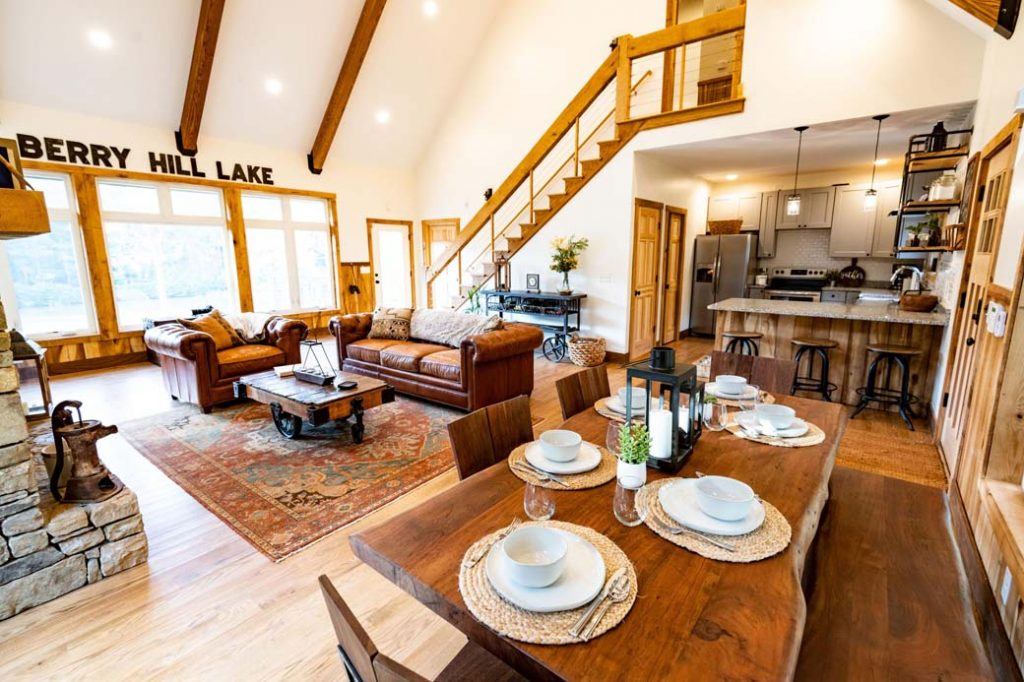
The Hollis family spends almost every weekend at Berry Hill Lake. Even in a February cold snap, their kids run around in socks. It doesn’t feel like a cabin that should be this comfortable, but it is. That comfort comes from a SIP mountain home in Virginia, built for the long haul and not just the view.
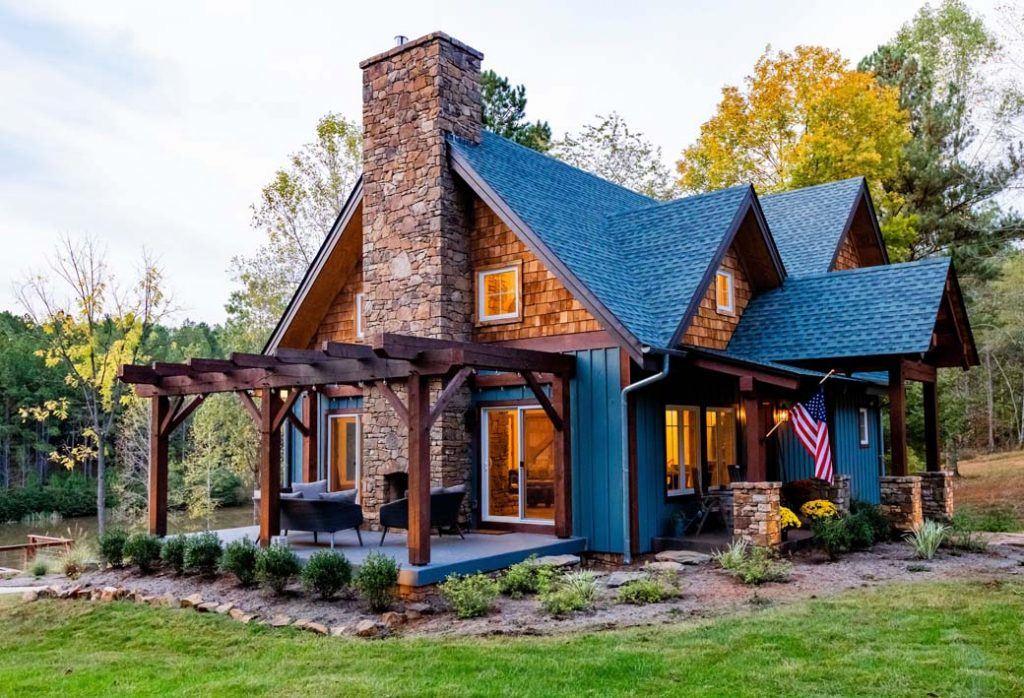
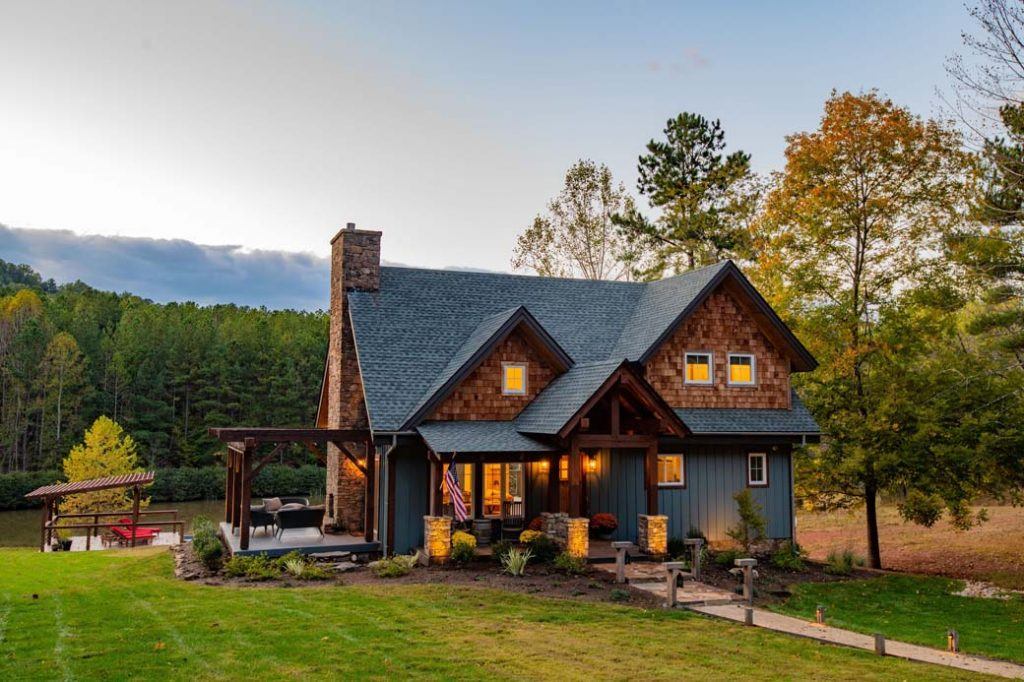
Berry Hill Lake sits on 250 wooded acres in the Virginia mountains. A private two-acre lake sits right below it. The design centers the four-bedroom retreat around that landscape. Board-and-batten siding, stonework, and vaulted ceilings give it a warm, handcrafted feel. Behind those finishes, however, sits a SIP building envelope. ACME built it with 6 1/2-inch SIP walls and 10 1/4-inch SIP roof panels.
Built Around a Complicated Roofline
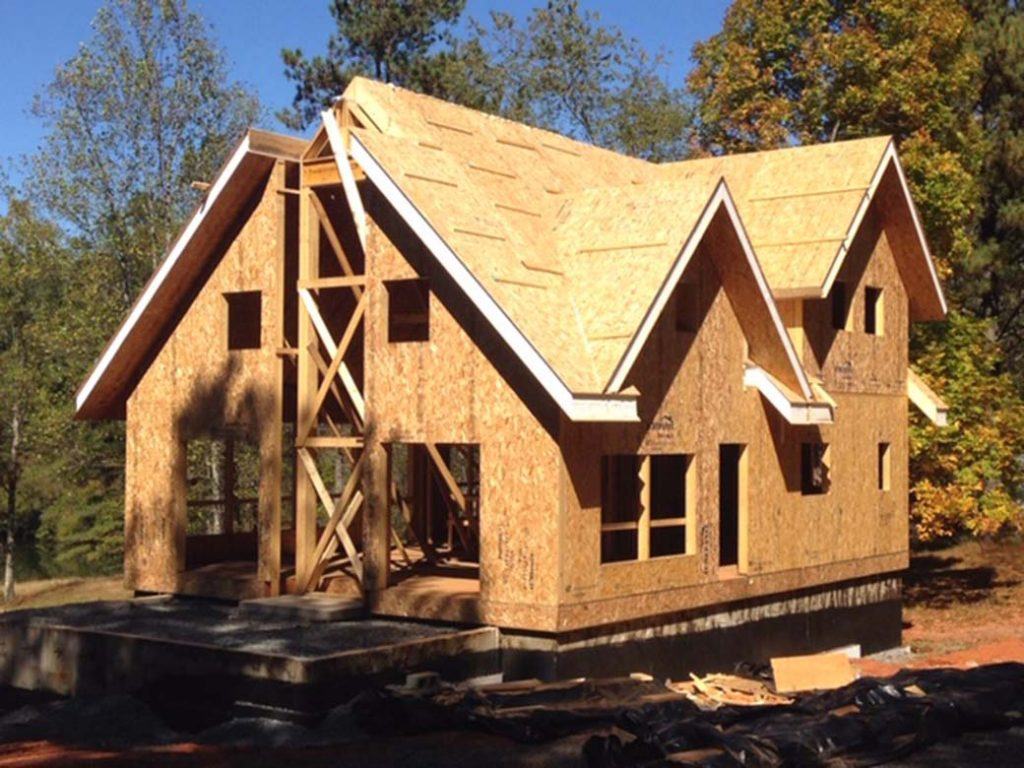
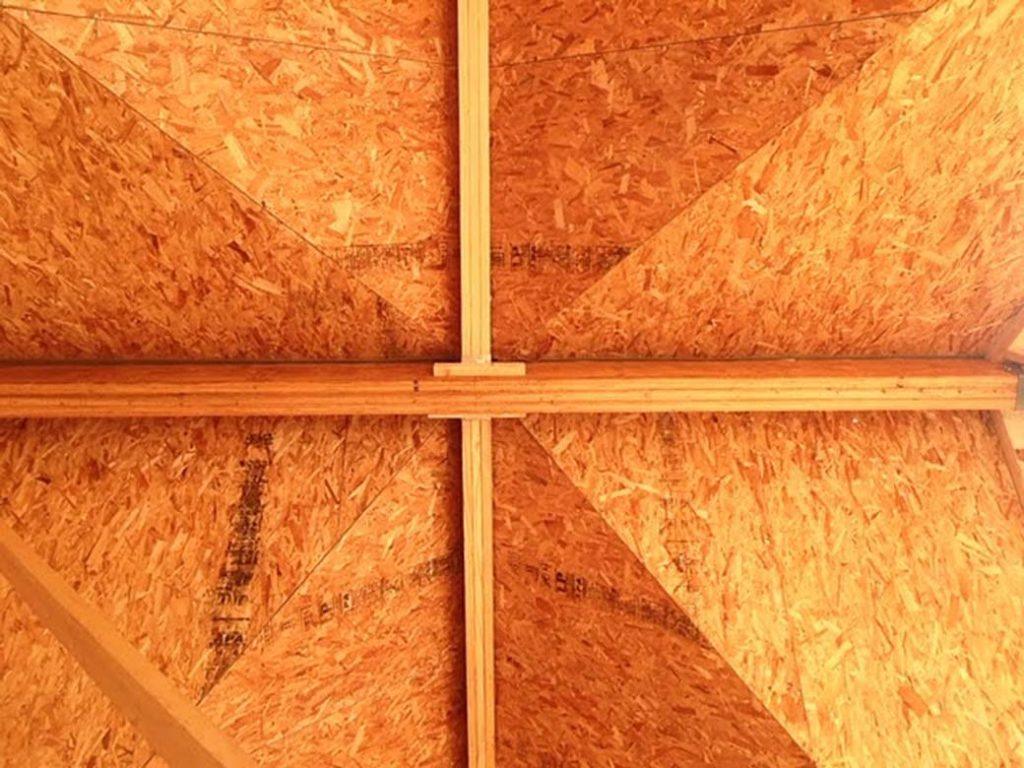
This home’s roofline is complicated. It has multiple pitches, dormers, and a large chimney gable. Four rooflines had to come together in one place. So ACME used 3D modeling to plan the panel package before cutting anything. As a result, every panel arrived pre-cut and ready to set. The four rooflines came together without a single extra field cut. That precision kept the framing crew moving fast. For more on how a build like this comes together, see our construction details guide.
Crews nearly finished framing in about two weeks. That is fast for a design this complicated. The SIP walls and roof form one continuous insulated envelope. As a result, the home gets real airtightness, not just good intentions. That is also why a SIP mountain home in Virginia can stay comfortable through a real Blue Ridge winter. Groups like the Structural Insulated Panel Association track results like this across the industry. In fact, Berry Hill Lake is a good example of what those numbers look like in a real home.
What Guests Feel Today
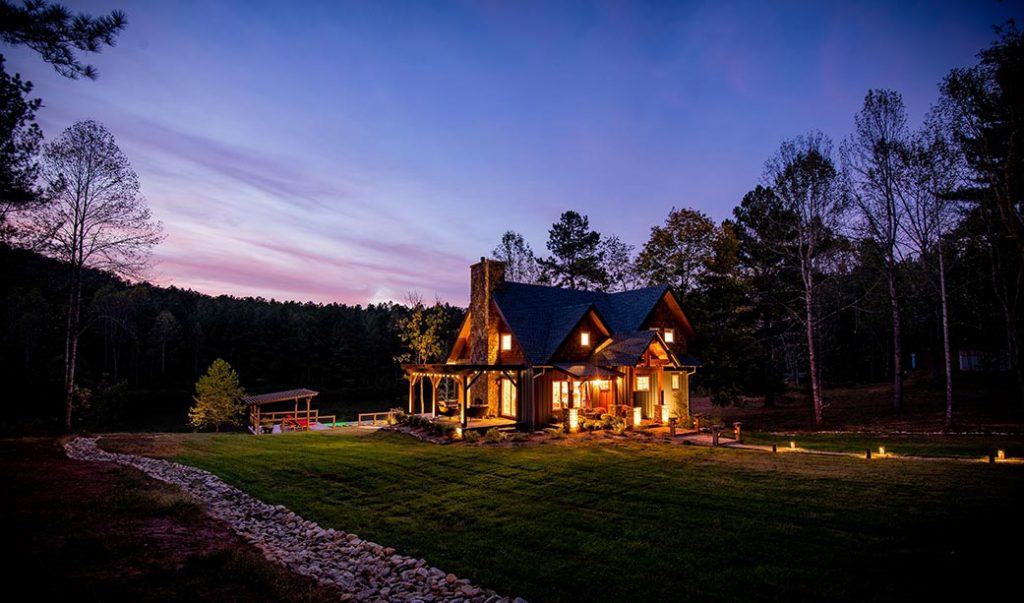
Today Berry Hill Lake is a private mountain getaway. The Hollis family opens it up for overnight stays too. Guests get vaulted ceilings, mountain views, and a house that stays warm without trying hard. None of that happens, though, without the panels working quietly behind the walls and roof. That is the whole point: the performance disappears, leaving only the comfort behind.